 022 23805673

These operations have been hugely successful in changing peoples ‘ lives over the last 5 decades. I have been fortunate in being in this field since the last 30 years ,innovating and researching so that the best practices can be found to consistently deliver the optimum results, with faster recovery and less pain without any major need for physiotherapy. This has allowed us to perform the largest number of Knee Replacements in the city of Mumbai ( over 1200 Knees per year ) since the last 5 years

What is a Knee Replacement
Knee Replacement is essentially a resurfacing operation in which the diseased and worn out parts of our thigh and shin bone are removed at a pre-determined specific angle, inclination and thickness, such that the remaining bone can accept an artificial anatomically shaped femoral ( thigh ) and tibial ( shin ) component. These components are cemented in bone with a special bone cement and a plastic insert is placed between these components. The undersurface of the knee cap is also generally resurfaced with a plastic component.
The surgical technique to perform a Knee Replacement
Classical
In this technique, a 10 to 12-inch longitudinal incision is made in front of the knee, slightly to the inner side of the knee cap. After dividing the skin, the thigh muscle ( quadriceps ) is also cut in the same direction, to expose the knee and to carry out the operation.
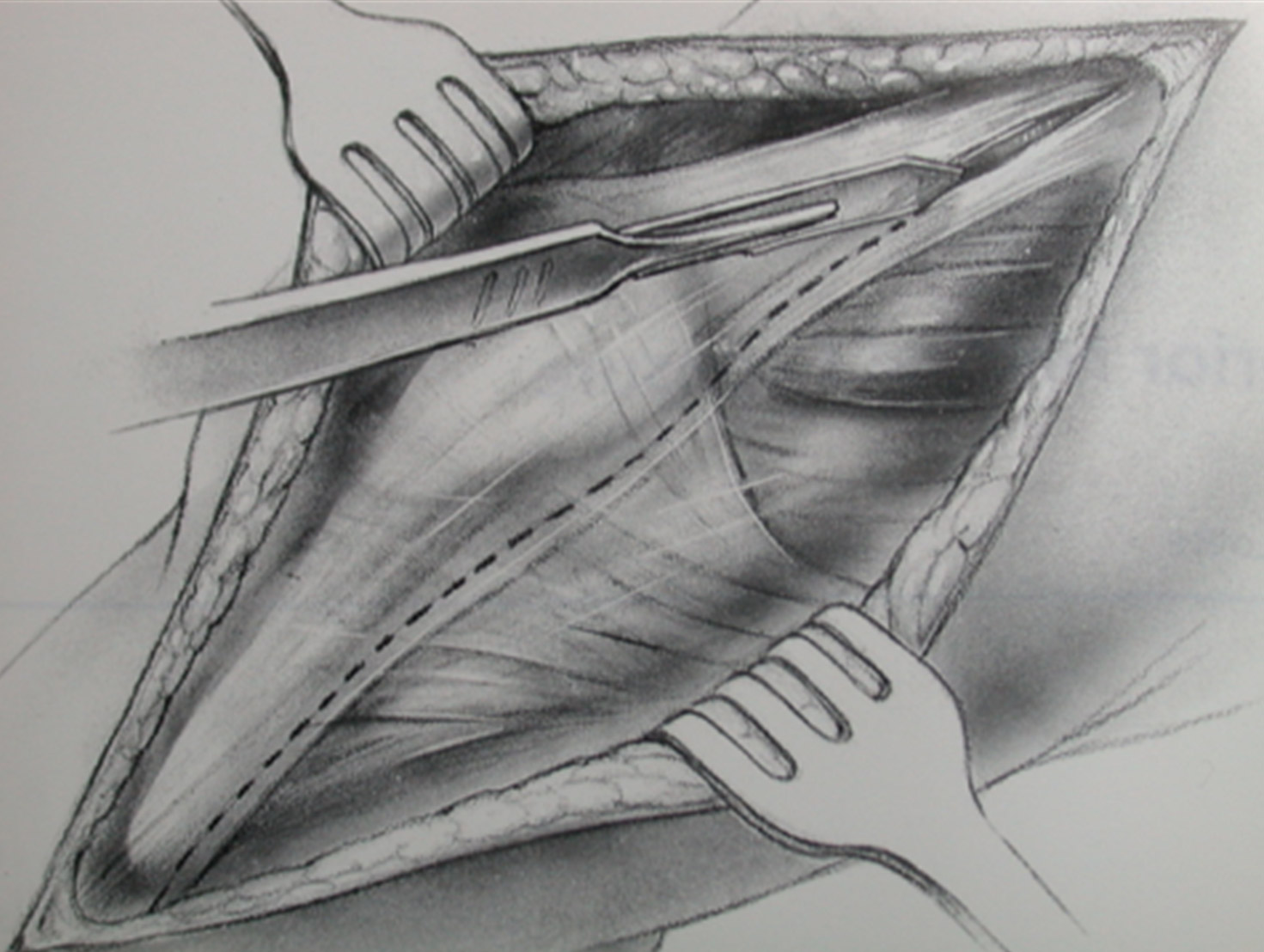
Afterwards, the cut quadriceps muscle and the skin are carefully stitched up.
Disadvantage: As the muscle is cut, it not only causes more pain and bleeding; the quadriceps also gets weaker and takes a longer time to heal hence delaying the recovery. To strengthen the muscle in the post-operative period extensive and often painful physiotherapy is required.